Deep Tissue Massage Benefits: Why Lagos Professionals Book It Weekly
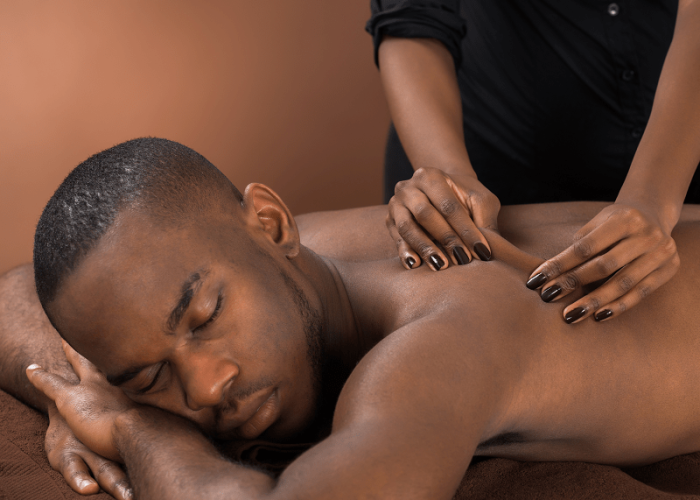
If you drive in Lagos, sit at a desk, lift weights, or carry a laptop between meetings all day, your upper back and shoulders are almost certainly locked. Deep tissue massage benefits are strongest for exactly this profile — the Lagos professional whose body pays for their calendar.
Reserve your session at Komfort Place Signature
Day & night rates. Private suites. English-speaking therapists. Located in Ikate, Lekki.
What deep tissue massage actually does
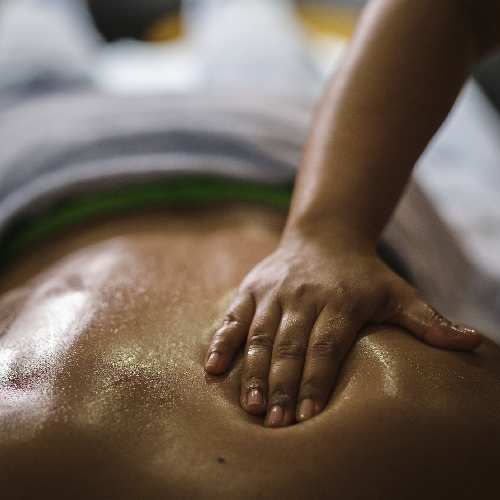
Deep tissue massage uses slow, firm strokes and sustained finger pressure to reach the deeper layers of muscle and connective tissue. Unlike a Swedish massage, the goal isn't relaxation-first — it's the release of long-held tension patterns in the neck, shoulders, lower back, glutes and IT band.
For a clinical overview, see Cleveland Clinic's massage therapy summary and this NCBI review on massage and lower back pain.
Six benefits Lagos guests notice within 48 hours
- Lower-back relief — the single most requested outcome. Two-thirds of our Deep Tissue guests book specifically for this.
- Looser neck and shoulders — targets the trapezius and levator scapulae that laptop-work overloads.
- Better sleep the same night — the parasympathetic nervous system down-shift is real and measurable.
- Improved posture — releasing chronic tightness lets your shoulders drop back into alignment.
- Reduced anxiety — sustained pressure elevates serotonin and drops cortisol.
- Faster recovery from workouts — clears lactic acid and reduces DOMS after heavy sessions.
Who should book deep tissue (and who shouldn't)
Book it if: you have chronic back or neck tension, you train hard, you sit at a desk for 8+ hours daily, or Lagos traffic has your shoulders permanently at your ears.
Choose a different treatment if: you're brand new to massage (start with our Swedish massage), you're pregnant, you bruise easily, or you're recovering from recent surgery. When in doubt, ask your GP or a physiotherapist first — the Mayo Clinic notes on massage contraindications are a good baseline.
What a 60-minute deep tissue session at Komfort Place looks like
- 3-minute intake — pain points, pressure preference, medical history.
- 10 minutes of warm-up Swedish strokes to prep the tissue.
- 35 minutes of focused deep pressure on your priority zones.
- 10 minutes of integration and gentle stretching.
- 2 minutes rest with water before you get up.
How to make the benefits stick
- Hydrate — drink 1L of water in the two hours after the session.
- Move gently — a 20-minute walk that evening beats sitting on the sofa.
- Sleep on it — most guests report the biggest release the morning after, not the night of.
- Rebook while it's fresh — 3–4 weeks is the sweet spot for the second session. Save on the sixth with our loyalty card.
Deep tissue vs the rest of our menu
If you want the release of deep tissue with the warmth of hot stones, ask for a Combination. If you want to share the experience, book a couples massage. For the full comparison, see our services page.
Reserve your session at Komfort Place Signature
Day & night rates. Private suites. English-speaking therapists. Located in Ikate, Lekki.
Frequently asked questions
Is deep tissue massage painful?+
It should feel like intense pressure, not sharp pain. A skilled therapist will apply firm strokes that produce a 'good hurt' releasing tension — never damaging pain. Always tell your therapist to ease off if pressure crosses your comfort line.
How often should I get a deep tissue massage?+
For chronic tension or a demanding job, once a month is a strong maintenance baseline. Athletes and desk workers with acute back pain often benefit from fortnightly sessions for the first 4–6 weeks.
Deep tissue vs Swedish — what's the difference?+
Swedish is gentle, gliding pressure aimed at relaxation. Deep tissue uses slow, firm strokes and reaches deeper muscle layers to release chronic knots. Swedish soothes; deep tissue rehabilitates.